Buy see-you.eu ?
We are moving the project
see-you.eu .
Are you interested in purchasing the domain
see-you.eu ?
domain@kv-gmbh.de · 0541-91531010
Buy see-you.eu ?
Does artificial intelligence scare you?
As an AI, I do not have emotions or fears. However, I understand that some people may feel scared or apprehensive about artificial intelligence due to concerns about its potential impact on society, privacy, and job displacement. It is important for developers and policymakers to address these concerns and ensure that AI is developed and used responsibly. **
What is artificial intelligence?
Artificial intelligence (AI) refers to the simulation of human intelligence processes by machines, typically computer systems. These processes include learning, reasoning, problem-solving, perception, and language understanding. AI technologies enable machines to perform tasks that typically require human intelligence, such as visual perception, speech recognition, decision-making, and language translation. AI is a rapidly evolving field with applications in various industries, including healthcare, finance, transportation, and entertainment. **

Similar search terms for Artificial Intelligence
Top-Angebote
Products related to Artificial Intelligence:
-
Learning Resources See My Feelings Mirror Single Mirror for Kids - Encourages Emotional Intelligence - Assorted coloursHelp children explore and express their emotions with the Learning Resources See My Feelings Mirror Single Mirror. This colorful mirror features a vibrant frame adorned with various facial expressions, making it a great addition to any playroom or learning environment. Key features of the See My Feelings Mirror include interactive learning, encouraging children to recognize and understand different emotions, a durable design made from high-quality materials, and perfect for imaginative play, helping kids express their feelings creatively. This mirror is a wonderful gift for birthdays, holidays, or any special occasion, and its engaging design makes it a great addition to any educational setting, helping young learners develop emotional intelligence.9,59 £*Shipping: 3,95 £Secure redirect to the provider
-
Arcturus Editions Computer Science for Curious Kids: An Illustrated Introduction to Software Programming, Artificial Intelligence, Cyber-Security-And More!Give young readers the gift of knowledge, with this beautifully illustrated, inspirational, and accessible book. Discover how scientific ideas can be harnessed to create computer programs that make our lives easier, help us to work more efficiently, and fill our leisure time with fun. Explore key ideas in computer science such as algorithms, graphics, networking, and intelligent systems. See how software has developed from its earliest days, and what computer scientists of the future may achieve. In this series, big new concepts pop off the page, thanks to vibrant diagrams and an engaging, energetic prose style. Kids will relish sharing them with friends and family! Discover a new way of looking at the world with this wide-ranging celebration of the subject of computer science. A great gift for readers aged 8-12.8,99 £*Shipping: 2,99 £Secure redirect to the provider
-
Bloomsbury On the Future of Species: Authoring Life by Means of Artificial Biological Intelligence by Adrian Woolfson - Non Fiction Hardback - Genome WritingOn the Future of Species: Authoring Life by Adrian Woolfson is a bold work of popular science from the geneticist and co-founder of genome writing company Genyro. It argues that biology is on the verge of becoming an engineering discipline, with artificial intelligence and synthetic genomics converging to let scientists write, edit and even design living organisms. The book maps out a future of programmable life, extended human lifespans and radically transformed ecosystems, while urging readers to consider the ethical stakes of this new power responsibly. Adrian Woolfson draws on his experience at the intersection of medicine, genetics and biotechnology to explain how genome writing could reshape the natural world. The book traces the path from today's gene-editing experiments in bacteria, yeast and other organisms, offering a thought-provoking exploration of the possibilities and implications of this emerging field.23,99 £*Shipping: 2,99 £Secure redirect to the provider
-
"""If You See Kay""" """If You See Kay 2020 Red Wine - California""""""Deep garnet color. Aromas of ripe fresh picked blueberries with hints of leather, clove and sage. Full bodied with black bramble fruit and star anise flavors. The wine is juicy and has big but supple tannic structure with long savory finish."""24,97 $*Shipping: 0,00 $Secure redirect to the provider




-
How do you instruct artificial intelligence?
Artificial intelligence is typically instructed through a process called machine learning, where algorithms are trained on large amounts of data to recognize patterns and make predictions. This training involves providing the AI with labeled examples to learn from, adjusting the model's parameters based on feedback, and testing its performance on new data. Additionally, AI can also be programmed using rules-based systems, where specific instructions and logic are coded into the system to guide its decision-making. Overall, instructing AI involves a combination of data, algorithms, and human oversight to ensure it learns and operates effectively. **
-
Are you afraid of artificial intelligence?
As an AI, I do not have emotions or fears. However, I understand that some people may have concerns about the potential impact of artificial intelligence on society, such as job displacement or loss of privacy. It is important for developers and policymakers to consider these concerns and work towards creating ethical and responsible AI systems. Ultimately, the goal should be to harness the potential of AI to benefit humanity while minimizing any negative consequences. **
-
How do you program artificial intelligence?
Programming artificial intelligence involves using various programming languages and tools to create algorithms that enable machines to perform tasks that typically require human intelligence. This can include using languages like Python, Java, or C++ to write code that processes and analyzes data, makes decisions, and learns from experience. Additionally, AI programming often involves utilizing libraries and frameworks such as TensorFlow, PyTorch, or scikit-learn to implement machine learning and deep learning models. Overall, programming AI requires a combination of coding skills, understanding of algorithms, and knowledge of AI concepts to create intelligent systems. **
-
Will artificial intelligence replace us?
Artificial intelligence has the potential to automate many tasks currently performed by humans, but it is unlikely to completely replace us. While AI can excel at tasks that require data processing and pattern recognition, it lacks human qualities such as creativity, empathy, and critical thinking. Humans will continue to be essential for decision-making, innovation, and tasks that require emotional intelligence. Therefore, rather than replacing us, AI is more likely to augment our capabilities and transform the way we work and live. **


Is artificial intelligence a threat?
Artificial intelligence can be seen as a potential threat due to concerns about job displacement, privacy invasion, and the potential for misuse in warfare or surveillance. However, it also has the potential to bring about significant advancements in various fields such as healthcare, transportation, and education. It is important for society to carefully consider and regulate the development and deployment of AI to ensure that its benefits are maximized while minimizing potential risks. **
What is this artificial intelligence?
Artificial intelligence (AI) refers to the simulation of human intelligence processes by machines, typically computer systems. These processes include learning, reasoning, problem-solving, perception, and language understanding. AI technologies are designed to perform tasks that typically require human intelligence, such as visual perception, speech recognition, decision-making, and language translation. AI is a rapidly evolving field with applications in various industries, including healthcare, finance, transportation, and entertainment. **
Top-Angebote
Products related to Artificial Intelligence:
-
Clementoni AIRO - Artificial Intelligence Robot Inspiring Young Innovators (9+), NewIntroduce your child to the exciting world of robotics and artificial intelligence with Clementoni AIRO, an educational and engaging AI robot designed in collaboration with the Science Museum. This interactive kit teaches fundamental coding concepts, problem-solving, and creativity through fun activities. Suitable for kids aged 9 and up, AIRO offers a hands-on experience with advanced technology, empowering young learners to explore AI in a playful and educational way. With its English-language support and user-friendly design, AIRO is perfect for inspiring future tech enthusiasts. ✔️ AI-Powered Robot: Introduces children to the basics of artificial intelligence with interactive activities. ✔️ Science Museum Collaboration: Designed with educational experts to ensure an engaging learning experience. ✔️ Programming Fun: Helps kids learn coding concepts and logical thinking through intuitive programming tasks. ✔️ Interactive Features: Equipped with sensors and AI functionalities for dynamic and responsive gameplay. ✔️ STEM Learning: Combines science, technology, engineering, and math in a fun and accessible way. ✔️ Age-Appropriate Design: Tailored for kids 9+, with a balance of challenge and simplicity. ✔️ Customizable Play: Encourages creativity with options to program and personalize the robot's actions. ✔️ English Language Support: All instructions and activities are in English for easy comprehension. ✔️ Durable and Safe: Built with child-safe materials for long-lasting fun and exploration. ✔️ Inspires Curiosity: Sparks an interest in robotics and artificial intelligence, opening doors to future learning. The Clementoni AIRO Artificial Intelligence Robot is more than just a toy—it's an educational tool that unlocks the potential of young minds. Perfect for parents and educators seeking to inspire kids in STEM, AIRO blends fun with learning to create a truly enriching experience. Unleash your child's curiosity and creativity with AIRO today!56,99 £*Shipping: 0,00 £Secure redirect to the provider
-
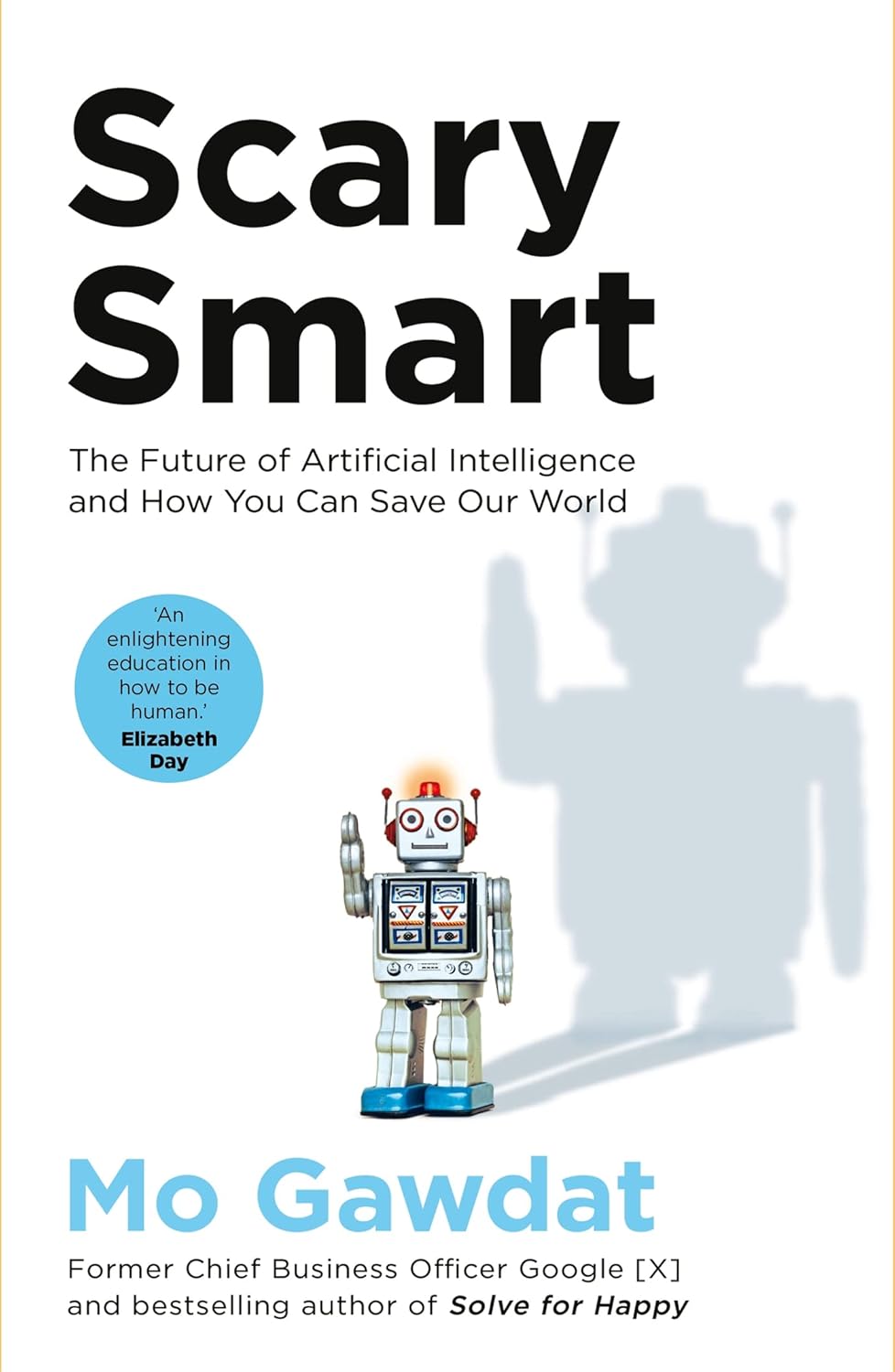
Bluebird (Pan Macmillan) Scary Smart by Mo Gawdat - The Future of Artificial Intelligence and How You Can Save Our World - Paperback Non Fiction - Sunday Times Business BookDiscover the urgent guide to the future of artificial intelligence with Scary Smart by Mo Gawdat. As the former Chief Business Officer of Google X, Gawdat argues that AI already surpasses human intelligence in speed and focus, yet still gets things badly wrong. This book explains why and lays out a practical blueprint for ensuring AI develops in a way that benefits humanity rather than threatens it. Drawing on his years of experience, Gawdat explores how AI systems learn from human behavior and why that makes their trajectory both fascinating and flawed. Published by Bluebird (Pan Macmillan), this paperback is a must-read for anyone interested in the intersection of technology and society.5,49 £*Shipping: 2,99 £Secure redirect to the provider
-
Learning Resources See My Feelings Mirror Single Mirror for Kids - Encourages Emotional Intelligence - Assorted coloursHelp children explore and express their emotions with the Learning Resources See My Feelings Mirror Single Mirror. This colorful mirror features a vibrant frame adorned with various facial expressions, making it a great addition to any playroom or learning environment. Key features of the See My Feelings Mirror include interactive learning, encouraging children to recognize and understand different emotions, a durable design made from high-quality materials, and perfect for imaginative play, helping kids express their feelings creatively. This mirror is a wonderful gift for birthdays, holidays, or any special occasion, and its engaging design makes it a great addition to any educational setting, helping young learners develop emotional intelligence.9,59 £*Shipping: 3,95 £Secure redirect to the provider
-
Arcturus Editions Computer Science for Curious Kids: An Illustrated Introduction to Software Programming, Artificial Intelligence, Cyber-Security-And More!Give young readers the gift of knowledge, with this beautifully illustrated, inspirational, and accessible book. Discover how scientific ideas can be harnessed to create computer programs that make our lives easier, help us to work more efficiently, and fill our leisure time with fun. Explore key ideas in computer science such as algorithms, graphics, networking, and intelligent systems. See how software has developed from its earliest days, and what computer scientists of the future may achieve. In this series, big new concepts pop off the page, thanks to vibrant diagrams and an engaging, energetic prose style. Kids will relish sharing them with friends and family! Discover a new way of looking at the world with this wide-ranging celebration of the subject of computer science. A great gift for readers aged 8-12.8,99 £*Shipping: 2,99 £Secure redirect to the provider
-
Does artificial intelligence scare you?
As an AI, I do not have emotions or fears. However, I understand that some people may feel scared or apprehensive about artificial intelligence due to concerns about its potential impact on society, privacy, and job displacement. It is important for developers and policymakers to address these concerns and ensure that AI is developed and used responsibly. **
-
What is artificial intelligence?
Artificial intelligence (AI) refers to the simulation of human intelligence processes by machines, typically computer systems. These processes include learning, reasoning, problem-solving, perception, and language understanding. AI technologies enable machines to perform tasks that typically require human intelligence, such as visual perception, speech recognition, decision-making, and language translation. AI is a rapidly evolving field with applications in various industries, including healthcare, finance, transportation, and entertainment. **
-
How do you instruct artificial intelligence?
Artificial intelligence is typically instructed through a process called machine learning, where algorithms are trained on large amounts of data to recognize patterns and make predictions. This training involves providing the AI with labeled examples to learn from, adjusting the model's parameters based on feedback, and testing its performance on new data. Additionally, AI can also be programmed using rules-based systems, where specific instructions and logic are coded into the system to guide its decision-making. Overall, instructing AI involves a combination of data, algorithms, and human oversight to ensure it learns and operates effectively. **
-
Are you afraid of artificial intelligence?
As an AI, I do not have emotions or fears. However, I understand that some people may have concerns about the potential impact of artificial intelligence on society, such as job displacement or loss of privacy. It is important for developers and policymakers to consider these concerns and work towards creating ethical and responsible AI systems. Ultimately, the goal should be to harness the potential of AI to benefit humanity while minimizing any negative consequences. **
Similar search terms for Artificial Intelligence
-
Bloomsbury On the Future of Species: Authoring Life by Means of Artificial Biological Intelligence by Adrian Woolfson - Non Fiction Hardback - Genome WritingOn the Future of Species: Authoring Life by Adrian Woolfson is a bold work of popular science from the geneticist and co-founder of genome writing company Genyro. It argues that biology is on the verge of becoming an engineering discipline, with artificial intelligence and synthetic genomics converging to let scientists write, edit and even design living organisms. The book maps out a future of programmable life, extended human lifespans and radically transformed ecosystems, while urging readers to consider the ethical stakes of this new power responsibly. Adrian Woolfson draws on his experience at the intersection of medicine, genetics and biotechnology to explain how genome writing could reshape the natural world. The book traces the path from today's gene-editing experiments in bacteria, yeast and other organisms, offering a thought-provoking exploration of the possibilities and implications of this emerging field.23,99 £*Shipping: 2,99 £Secure redirect to the provider
-
"""If You See Kay""" """If You See Kay 2020 Red Wine - California""""""Deep garnet color. Aromas of ripe fresh picked blueberries with hints of leather, clove and sage. Full bodied with black bramble fruit and star anise flavors. The wine is juicy and has big but supple tannic structure with long savory finish."""24,97 $*Shipping: 0,00 $Secure redirect to the provider
-
Uplifted Finds Triple Tier Intelligence Play Tower blueEngage your cat's mind and body with this TripleTier Intelligence Play Tower. This classic interactive toy is designed with three stacked levels, each featuring a captured ball that skitters along a circular track. This multilevel architecture...54,97 $*Shipping: 0,00 $Secure redirect to the provider
-
How do you program artificial intelligence?
Programming artificial intelligence involves using various programming languages and tools to create algorithms that enable machines to perform tasks that typically require human intelligence. This can include using languages like Python, Java, or C++ to write code that processes and analyzes data, makes decisions, and learns from experience. Additionally, AI programming often involves utilizing libraries and frameworks such as TensorFlow, PyTorch, or scikit-learn to implement machine learning and deep learning models. Overall, programming AI requires a combination of coding skills, understanding of algorithms, and knowledge of AI concepts to create intelligent systems. **
-
Will artificial intelligence replace us?
Artificial intelligence has the potential to automate many tasks currently performed by humans, but it is unlikely to completely replace us. While AI can excel at tasks that require data processing and pattern recognition, it lacks human qualities such as creativity, empathy, and critical thinking. Humans will continue to be essential for decision-making, innovation, and tasks that require emotional intelligence. Therefore, rather than replacing us, AI is more likely to augment our capabilities and transform the way we work and live. **
-
Is artificial intelligence a threat?
Artificial intelligence can be seen as a potential threat due to concerns about job displacement, privacy invasion, and the potential for misuse in warfare or surveillance. However, it also has the potential to bring about significant advancements in various fields such as healthcare, transportation, and education. It is important for society to carefully consider and regulate the development and deployment of AI to ensure that its benefits are maximized while minimizing potential risks. **
-
What is this artificial intelligence?
Artificial intelligence (AI) refers to the simulation of human intelligence processes by machines, typically computer systems. These processes include learning, reasoning, problem-solving, perception, and language understanding. AI technologies are designed to perform tasks that typically require human intelligence, such as visual perception, speech recognition, decision-making, and language translation. AI is a rapidly evolving field with applications in various industries, including healthcare, finance, transportation, and entertainment. **
* All prices are inclusive of VAT and, if applicable, plus shipping costs. The offer information is based on the details provided by the respective shop and is updated through automated processes. Real-time updates do not occur, so deviations can occur in individual cases. ** Note: Parts of this content were created by AI.